A Tree Fell on Your House in Texas: What to Do First and Who Pays
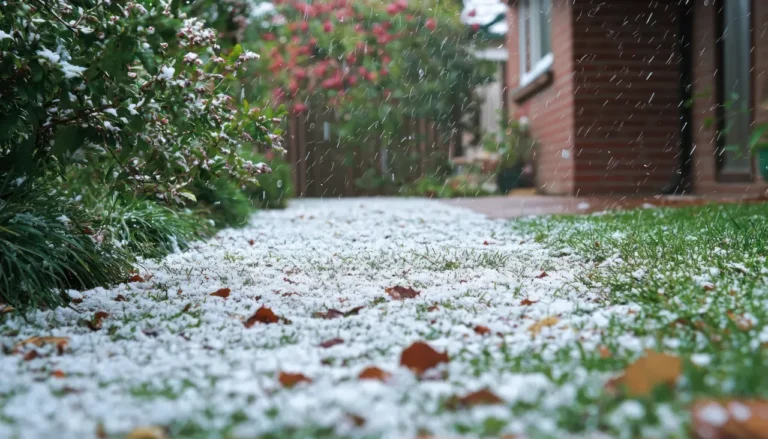
In early February 2023, ice snapped limbs and whole trunks across Austin. Across the city, a tree fell on house roofs, garages, and carports while families slept. The Texas A&M Forest Service estimated that about 31 percent of the city’s trees were damaged. That is roughly 10.5 million trees.
Call for Roof Help
Call now and tell us what is happening with your roof and your ZIP code.
📞 Call Now: (512) 548-9448Now it has happened to you. The ceiling may be sagging. Water may be coming in. Your phone is full of questions. Who do you call first? Does insurance pay? Can you cut the tree yourself? What if it was your neighbor’s tree?
This guide answers those questions in the order they matter. It relies on Texas and City of Austin sources, not guesses. If the roof is open and bad weather is coming, call (512) 548-9448 now and read the rest after.
What Will You Learn From This Guide?
You will learn the safe order of steps after a tree hits your home. You will see how Texas insurance treats fallen trees and who pays for a neighbor’s tree. You will also learn Austin permit rules and how roof repair works. Every fact comes from a Texas or City of Austin source you can check yourself.
Most pages on this topic skip Texas rules, city permits, water damage, and the repair itself. This one covers all of them.
When a tree falls on house roofs, the order of your first steps matters most. You will find a quick action list, a table of who pays for what, and the Texas claim deadlines. You will also see how a deductible can wipe out a small claim. Short on time? Read the first hour and the mistakes sections. This guide is not legal advice and does not replace your policy. Your agent has the final word on coverage.
What to Do When a Tree Falls on Your House in the First Hour
Get everyone out of the damaged rooms first. Stay 35 feet from any power line and call Austin Energy at 512-322-9100 or 911. Leave and call 911 if you smell gas. Stay off the roof, photograph the damage before anything moves, and call your insurer. Do not cut the tree yourself, even if it looks small.
If a tree fell on house walls or the roof tonight, work through these steps in order. Knowing what to do when a tree falls on your house keeps a bad night from getting worse. Safety comes before photos, tarps, or phone calls.
- Move people and pets to a part of the house with no cracks or sagging ceilings.
- Look for power lines. If the tree touched a line, stay at least 35 feet away. Austin Energy warns that branches touching a line can carry current.
- Check for gas. If you smell gas, leave the house and call 911 from outside.
- Stay off the roof. A tree resting on a roof can shift without warning.
- Take photos and video of the tree, the roof, and every damaged room before anything moves.
- Stop water from getting in. Ask a roofer to tarp any opening once the tree is safe to work around.
- Call your insurance company and report the claim as soon as you can.
Who Should You Call First?
| Order | Who to call | When |
|---|---|---|
| 1 | 911 | Anyone hurt, a gas smell, or fire |
| 2 | Austin Energy, 512-322-9100 | The tree is on or near power lines |
| 3 | Your insurance agent or company | As soon as everyone is safe |
| 4 | A tree service with insurance | After the lines are safe |
| 5 | A roofer | To tarp and inspect the roof |
| 6 | City of Austin, 3-1-1 | Questions about tree permits |
Should You Move the Tree Yourself?
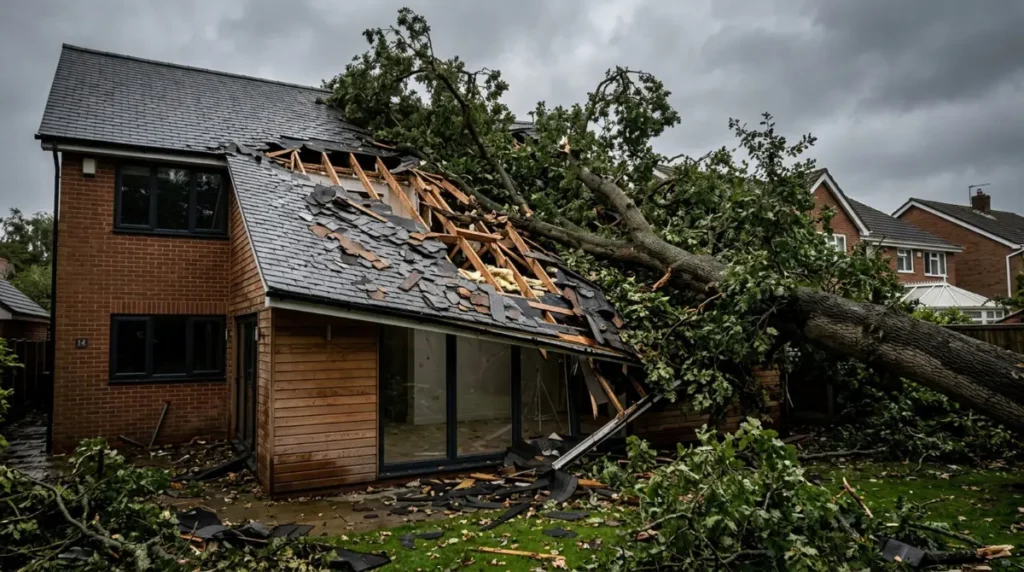
No. Cutting a tree that rests on a roof is one of the riskiest jobs there is. The weight can shift as soon as a limb is cut. A branch touching a line may also be energized. A tree service with the right equipment should lift it off, often in pieces, before a roofer starts.
Is the House Safe to Stay In?
Leave the damaged area if you see a sagging ceiling, new wall cracks, sticking doors, or daylight through the roof. The City of Austin advises leaving structural repairs to professionals. If a main beam or wall looks damaged, stay elsewhere until someone checks it.
Does Insurance Pay When a Tree Falls on Your House in Texas?
Usually, if the tree hit the house. The Texas Department of Insurance says many policies pay for damage from falling objects like trees. Many also pay to remove a fallen tree that damaged your house or blocked your driveway. Your deductible still applies, so call your agent to confirm what your policy covers.
The Texas Department of Insurance, or TDI, is the state agency that regulates insurers. Its guidance is the best starting point. Removal often has its own limit. Consumer Reports notes that removal coverage is typically limited to $500 or $1,000, citing the Insurance Information Institute.
Here is who usually pays after a tree fell on house, car, or yard.
| What was hit | Who usually pays | Watch for |
|---|---|---|
| Your house or roof | Your homeowners policy | Your deductible applies |
| Tree removal | Your policy, often with a small cap | Limits near $500 or $1,000 |
| Your car | Your auto policy, if you carry comprehensive | No comprehensive means no payment |
| Damage from a neighbor’s tree | Your own policy in most cases | The neighbor pays only if at fault |
| A tree that missed everything | You pay for cleanup | A blocked driveway may be an exception |
My Neighbor’s Tree Fell on My House: Who Pays?
In most cases, your own policy pays. TDI says your neighbor’s policy probably won’t pay unless the neighbor was at fault. A neighbor isn’t responsible for acts of nature. If you searched for “neighbors tree fell on my house,” the short answer is to start with your own claim.
Fault changes the picture when the tree was dead or clearly rotten and the owner ignored it. Tell your insurer. Consumer Reports explains that your insurer may then seek repayment from the neighbor’s insurer. You may also get your deductible back. Photos of the tree before it fell help your case.
What If the Tree Missed the House?
TDI says trees and limbs that fall in your yard without damaging anything usually aren’t covered. You would pay for cleanup yourself. A tree that blocks your driveway may be an exception, so ask.
What About Your Car?
Your auto policy pays for tree damage to a car only if you carry comprehensive coverage, according to TDI. If the same tree fell on house and car together, expect two separate claims.
Should You File a Claim or Pay Out of Pocket?
File when the repair clearly costs more than your deductible. Pay out of pocket when the damage is small. Ask your agent whether a small claim could affect your renewal before you decide. Never skip the call itself. Only your policy gives the final answer, and your agent can read it with you.
Here is a simple example, not a real homeowner. Say your deductible is $2,000. A fallen limb cracks a few shingles and the repair costs $1,400. A claim would pay $0. You would pay the whole bill anyway.
Now flip it. A tree fell on house framing, crushed the decking and ceiling, and the work runs past $10,000. The claim pays everything above the deductible. For that case, filing is the clear choice.
Bob Vila’s insurance guide says common deductibles run from about $500 to $2,000, and sometimes more. Check your declarations page for yours. Some policies use a flat dollar amount. Others use a percentage of your home’s insured value. The two can differ by thousands of dollars.
One rule matters here. A contractor in Texas cannot offer to waive your deductible. TDI calls that illegal, and the deductible stays your responsibility. Your insurer may ask for proof you paid it.
How Do You Document the Damage and How Fast Must Your Insurer Respond?
Photograph everything before you move the tree or make repairs, then save every receipt. Under the TDI claim guide, insurers have 15 business days to acknowledge a claim. They get 15 more to decide once they have what they need. Approved claims must be paid within five business days, so clear records speed everything up.
TDI recommends photographing the damage first. It also suggests temporary repairs to stop more damage, and saving receipts for materials and labor. After a tree fell on house walls or a roofline, a clear record makes the claim faster.
- Take wide photos of the house and close photos of each problem.
- Photograph the attic, ceilings, and walls inside.
- Keep receipts for tarps, tree removal, hotel stays, and supplies.
- Write down the date, the time, and who you spoke with.
Deadlines can be extended after a weather catastrophe. The TDI claim guide explains each step.
What If Your Claim Is Denied or Delayed?
A denial can still happen after a tree fell on house walls. Ask the insurer for the reason in writing. If you still disagree, you can file a complaint with TDI online. You can also call the TDI Help Line at 800-252-3439 for questions.
Who Removes the Tree and How Do You Hire Safely?
A tree service with insurance and the right equipment should remove it. Ask for proof of coverage, get two or three written bids, and never hire a crew that shows up uninvited. Do not choose on price alone. Austin Energy handles any tree touching its lines, so call it first if wires are involved.
A Texas A&M guide on failing trees offers sound hiring advice. Use the International Society of Arboriculture search tool by ZIP code to find a credentialed arborist. Ask for proof of insurance and call the insurer to confirm it. A crew with a chainsaw and no insurance can leave you liable if someone gets hurt.
How Do You Spot a Storm Chaser?
After a tree fell on house roofs across a neighborhood, door to door contractors often follow. TDI lists warning signs of a contractor scam. Be careful if someone asks you to sign before giving a price. The same goes for a contract with blank spaces. Walk away from any offer to “work your deductible into the bid.” Also be careful with large payments up front. Pay by check or card so you have a record.
WFAA reports that Texas does not license or regulate roofers. So checking references, insurance, and a written bid matters even more. If someone offers to waive your deductible, report it to the Texas Attorney General at 800-621-0508.
Do You Need a City Permit to Remove the Tree in Austin?
Not before an emergency removal. The City of Austin says a dead, diseased, or hazardous tree can be removed before receiving a permit. You must submit a permit request within seven days of removal. If you are unsure whether your tree is regulated, call 3-1-1 and ask before the crew starts cutting.
The City of Austin explains the emergency rule. On one and two unit homes, the City regulates trees 19 inches or more in diameter. Its hazard tree page explains. Measure the trunk before it is hauled away, and keep that number with your photos. It matters most when the tree fell on house and yard at once.
Roof repairs have their own rule. The City says small repairs to roof decking generally don’t need a permit, but the work must still meet code. Ask your roofer what applies before the job starts.
What Happens to Your Roof After the Tree Comes Off?
A roofer tarps the opening, checks the structure, then repairs or replaces the damaged area. When a tree fell on house framing, broken rafters get fixed before any new shingles go on. A small puncture is a section repair. Damage across several slopes, or an older roof, can make replacement the better choice.
| Step | What happens | Why it matters |
|---|---|---|
| 1. Tarp | A cover goes over the opening | Stops water from getting in |
| 2. Inspect | The decking, rafters, and trusses are checked | Hidden breaks cause sagging later |
| 3. Repair framing | Broken wood is replaced or braced | New shingles need solid support |
| 4. Roof surface | Shingles, underlayment, and flashing are replaced | Seals the repaired area |
| 5. Inside | Wet insulation and drywall are dried or replaced | Prevents mold and stains |
Our tree damage roof repair page explains the full process. If the opening needs cover tonight, see emergency roof repair. Impact can also loosen nearby shingles, so missing shingles repair may apply. A tree can bend metal around chimneys and vents too, so ask the roofer to check the flashing as well.
The roof problems gallery shows typical damage, which helps you describe what you see.
When a Tree Falls on House Rafters, What Breaks First?
The weight can crack the decking, rafters, or trusses. Shingles can look fine while the wood below is split. That is why a roofer checks the attic before pricing the repair.
Can Water and Mold Follow a Tree Strike?
Yes. Once the roof opens, water can soak insulation, drywall, and framing in a day or two. The EPA says wet materials should be dried within 24 to 48 hours to stop mold. Tarp fast, then dry the space or hire a drying professional. Keep photos of every wet area, since your insurer may ask for them later.
The risk is highest when a tree fell on house roofs during a storm, because water follows fast. The EPA mold guide gives the 24 to 48 hour window. That is why a tarp matters even if the full repair has to wait for your insurer. TDI also asks homeowners to make temporary repairs to prevent further damage.
Look for bubbling ceiling paint, a musty smell, or wet attic insulation. Sagging drywall holding water may fall, so keep people out of that room. Our page on ceiling leak repair covers the repair side.
Angi puts the average ceiling repair at $1,075. It lists water damaged ceiling repair at $45 to $55 per square foot. Many policies cover water damage that follows a covered tree strike, so ask your agent.
Should You Repair or Replace the Roof?
Repair when the damage is limited to one area and the rest of the roof is sound. Replace when damage spans several slopes, the decking is widely broken, or the roof is old. An inspection after the tree is off gives you the facts, so decide after that, not before.
| Situation | Usually points to |
|---|---|
| One puncture, young roof | Section repair |
| Several slopes damaged | Larger repair or replacement |
| Roof at 15 to 20 years or more | Replacement worth pricing |
| Broken rafters or trusses | Structural repair first |
Fixr says asphalt shingles typically last 15 to 40 years. It puts a typical shingle roof at about $14,500, with most jobs between $8,000 and $36,000. Angi’s Austin average for roof replacement is $10,295. Your price depends on size, pitch, and materials. If the tree fell on house framing under an older roof, price both options before you decide. Our roof replacement page explains the process. Our cost guide lists current Austin price ranges.
If a roof is flat, the same logic applies. A flat section needs its own checks, so see flat roof repair. Before deciding, a roof inspection shows how far the damage runs. Live in Round Rock, Cedar Park, or Pflugerville? See the local pages for Round Rock, Cedar Park, Leander, Hutto, Kyle, San Marcos, Lakeway, and Pflugerville.
Why Do Trees Fall on Austin Houses?
Trees fall when weight or weak wood exceeds what the tree can hold. In Austin, ice is the best documented cause, since the 2023 storm damaged about 31 percent of the city’s trees. Texas A&M also notes that defective trees often cause damage when catastrophes hit urban areas. A weak tree near a home is a real risk.
The 2023 ice storm is the clearest local example. Between January 30 and February 3, 2023, ice broke limbs across the city. The Texas A&M Forest Service estimated that about 31 percent of Austin’s trees were damaged. That is roughly 10.5 million trees. Live oak, Ashe juniper, cedar elm, and hackberry were hit hardest.
The report found an average of 13 percent crown damage, and it flags broken and downed limbs as hazards. The lesson is to have large limbs over your roof checked.
How Can You Lower the Chance of It Happening Again?
Have an arborist look at large limbs over your roof before winter. Remove dead branches early, and never trim near power lines yourself. Austin Energy offers a request form for trimming around its lines. A yearly check costs far less than the repairs, the deductible, and the stress that follow a storm.
Prevention matters because once a tree fell on house roofs, the costs stack up fast. Check your yard once a year for dead branches, trunk cracks, leaning trunks, and lifting soil near roots. If you see any, book an arborist before the next storm season. More tips are in our roof guides.
Schedule a roof inspection after any near miss. A brushing limb can lift shingles or crack a vent. Our roof vent repair and roof leak detection pages cover the follow up checks. Visit the home page to see every service in one place.
What Mistakes Should You Avoid After a Tree Hits Your House?
Do not cut the tree yourself, sign a blank contract, or pay in full up front. Do not throw out damaged items before photographing them. Do not wait days to tarp the roof. After a tree fell on house walls or the roof, each mistake raises your risk, your bill, or both.
- Moving the tree first. It destroys evidence and can cause injuries.
- Signing before seeing a price. TDI lists this as a scam warning sign.
- Paying everything up front. Pay in stages and keep the final payment until the work is done.
- Skipping receipts. You may need them for the claim.
- Waiting on the tarp. Water damage grows fast, and your policy expects reasonable temporary repairs.
- Ignoring the permit request. If a regulated tree came down, file within seven days.
Tree Damage Questions
Who Removes a Tree That Is on a Power Line?
Austin Energy handles its lines. Call 512-322-9100 and stay well back until crews make it safe. A tree service comes after that.
Can I Cut Up the Tree Myself Once It Is Off the Roof?
On the ground and away from any lines, many homeowners clear smaller limbs. Large trunks and anything still under tension are safer left to a tree service.
How Long Does Roof Repair Take After a Tree Strike?
It depends on how much framing broke and how fast the claim moves. If the tree fell on house framing, expect longer work than a simple shingle fix. A tarp can go on quickly. The full repair follows once the tree is removed and the scope of work is agreed.
Will a Tree Claim Raise My Premium?
It can, but it depends on your insurer. Ask your agent before you file, especially for small claims near your deductible.
Is a Rotten Neighbor Tree My Neighbor’s Fault?
It can be. If the tree was visibly dead and the owner ignored it, tell your insurer. They may pursue the neighbor’s insurer for repayment.
Does Insurance Pay for a Fence or Shed?
TDI explains that other structures coverage pays to repair things not attached to your house, like fences and sheds. Check your declarations page for the limit, and photograph every damaged structure.
Does Insurance Pay for a Hotel?
If a covered loss forces you out, additional living expenses coverage pays extra costs like hotels and meals, says TDI. It is often limited to 10 to 20 percent of your dwelling coverage. Keep every receipt.
What If You Rent the Home?
If a tree fell on house you rent, tell your landlord right away. TDI notes that a landlord’s insurance won’t cover your personal items. Renters insurance covers your belongings and can pay additional living expenses after a covered loss.
Do I Wait for the Adjuster Before Tarping?
No. TDI says to make temporary repairs to prevent more damage. Photograph first, tarp, and save the receipt.
Can a Roofer Waive My Deductible?
No. Texas law bars it. The fine can reach $2,000, with up to six months in jail. Report offers to the Texas Attorney General.
Does Texas Require a Roofer License?
WFAA reports that Texas does not license roofers. Ask for references, proof of insurance, and a written bid.
What If I Removed a Large Oak Without a Permit?
For a dead or hazardous tree, the City of Austin allows emergency removal first. File the permit request within seven days. Call 3-1-1 if unsure.
What to Do If a Tree Falls on Your House at Night?
Follow the same safety steps. Use a flashlight, not candles, in case gas is leaking. Call Austin Energy or 911 if lines are down. A tarp can often wait for daylight if the room stays dry.
How Soon Should the Roof Be Covered?
As fast as it can be done safely. The EPA says wet materials should dry within 24 to 48 hours to avoid mold.
Need Help After a Tree Hits Your Roof? Call Now
A tree on the roof feels like a crisis, but the path is clear. Knowing what to do when a tree falls on your house turns panic into a plan. Stay safe, photograph everything, call your insurer, and cover the opening. Then deal with the tree, the permit, and the repair.
Whether a limb or a whole tree fell on house, garage, or carport, protect the roof fast. Call (512) 548-9448 and describe what you see. Remember three points. Never cut the tree yourself. Never sign a blank contract. Never skip the photos.
Which tree near your home worries you most right now?
© 2026 Austin Roof Response. All rights reserved.